COMPOSE WITH INTENTION
Image generation
Subject, style, composition, camera, and light. Build believable materials, refine a local edit, and keep a visual direction consistent.
YOUR NEXT CREATIVE SKILL
Move from vague ideas to clear direction for image, music, and video generation. One practical playbook. One repeatable framework.
One-time purchase · Instant digital download via Gumroad
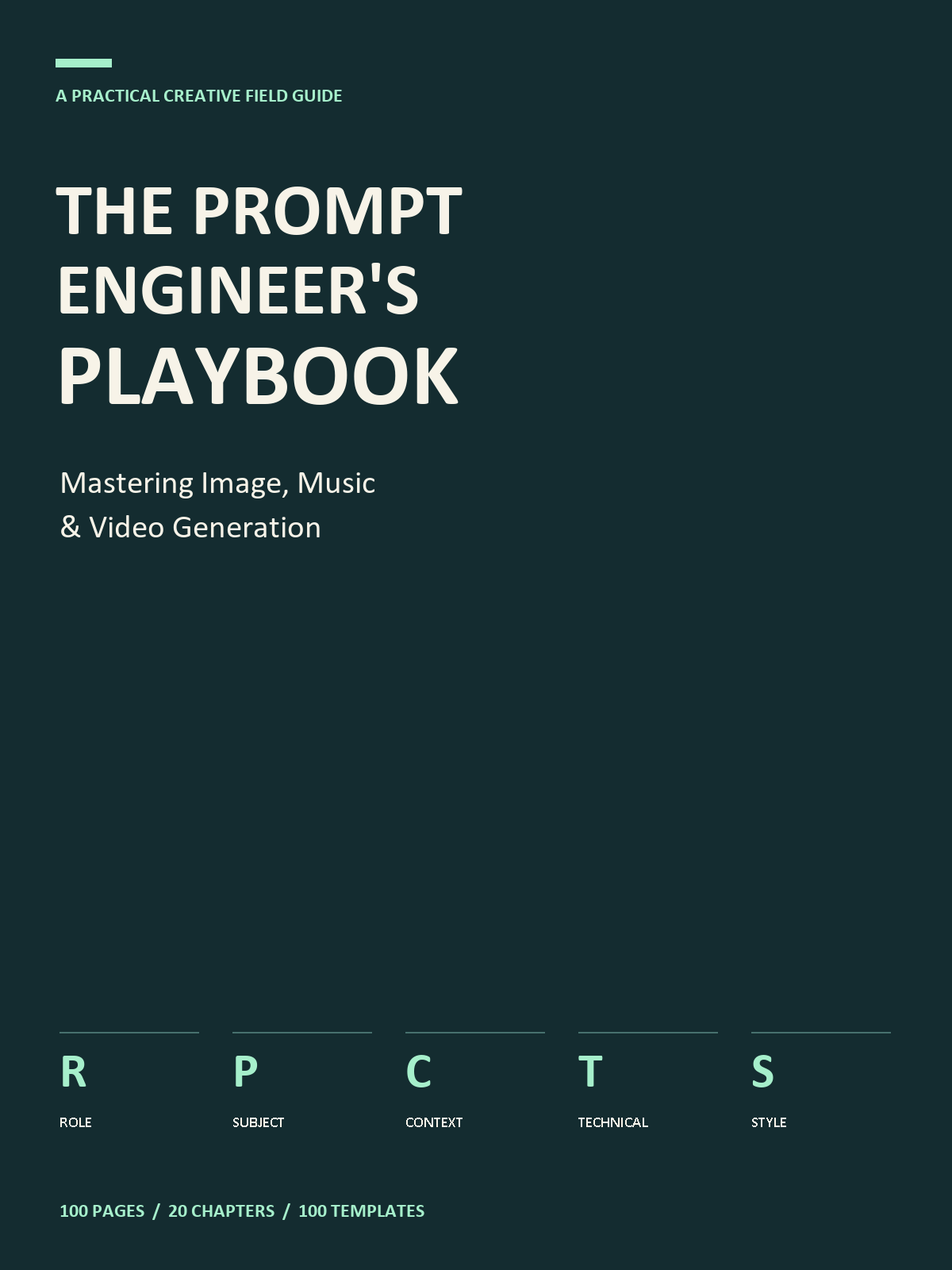
01 / THE PLAYBOOK
Learn to brief, generate, inspect, diagnose, and revise. Then bring the results together in a coherent creative project.
COMPOSE WITH INTENTION
Subject, style, composition, camera, and light. Build believable materials, refine a local edit, and keep a visual direction consistent.
ARRANGE WITH PURPOSE
Translate mood into genre, groove, instruments, lyrics, and production. Make room for speech and finish audio for its actual use.
DIRECT THE CHANGE
Plan one readable action and a motivated camera move. Build continuity, pair audio with visuals, and turn clips into an edit.
02 / ONE FRAMEWORK, EVERY MEDIUM
Five decisions turn an idea into a usable brief. Select a letter to see how it works.
01 / ROLE
Think like the specialist the task needs, then translate that expertise into concrete creative decisions.
A product photographer thinks about material, reflection, and label clarity. A composer thinks about arrangement and space for speech.
A planning tool, not a magic formula. Every output still needs review.
03 / FROM FIRST BRIEF TO FINISHED PROJECT
Five parts, with a template vault, common mistakes, and a ten-minute practice exercise at the end of every chapter.
Turn wishes into testable briefs, compare outputs, and build a library that preserves your decisions.
From a simple baseline to product shots, reference workflows, inpainting, and character consistency.
Separate lyrics from direction, assign arrangement roles, and learn ten practical genre recipes.
Make manageable shots, preserve continuity, diagnose failures, and build a complete sequence.
Coordinate a campaign, find the right template, and present your decisions in a portfolio.
04 / TRY THE APPROACH
One of the first lessons: make success observable before you generate.
Download the free four-page chapter ↗“A premium tea ad.”
“Product photograph of one ivory tea tin on walnut, positioned on the right. Leave the left half clear for a headline. Soft side light, realistic matte materials, restrained cream and charcoal palette.”
05 / YOUR CREATIVE DESK REFERENCE
For creators, freelancers, educators, and small teams who want clearer direction and a repeatable way to improve.
A FEW USEFUL DETAILS
No. Start with the foundations, then practice one medium at a time. Each chapter ends with a short actionable exercise.
The book discusses Midjourney, DALL-E 3, Stable Diffusion, Adobe Firefly, Suno, Udio, Stable Audio, Runway, Pika, Kling, and Sora-style workflows. Legacy models are identified, including retired Runway Gen-3. Features and availability vary; the focus is transferable technique.
Yes. Sixty chapter templates appear in the book. The separate vault consolidates those sixty plus forty extensions into 100 unique, copyable templates. Chapter 19 indexes the full collection.
Yes. You can adapt the templates for personal and client projects. The book and vault are for your own use and cannot be redistributed or resold as a competing template product. Check the rights for your inputs and the terms of each generation tool.
The purchase includes the learning materials and templates. It does not include model subscriptions, credits, or guaranteed outcomes. Outputs require testing, selection, and finishing.
Gumroad provides the download after purchase and sends the receipt. The main book is a PDF; the vault also comes in editable, searchable formats. This is a digital product, with no physical shipping.